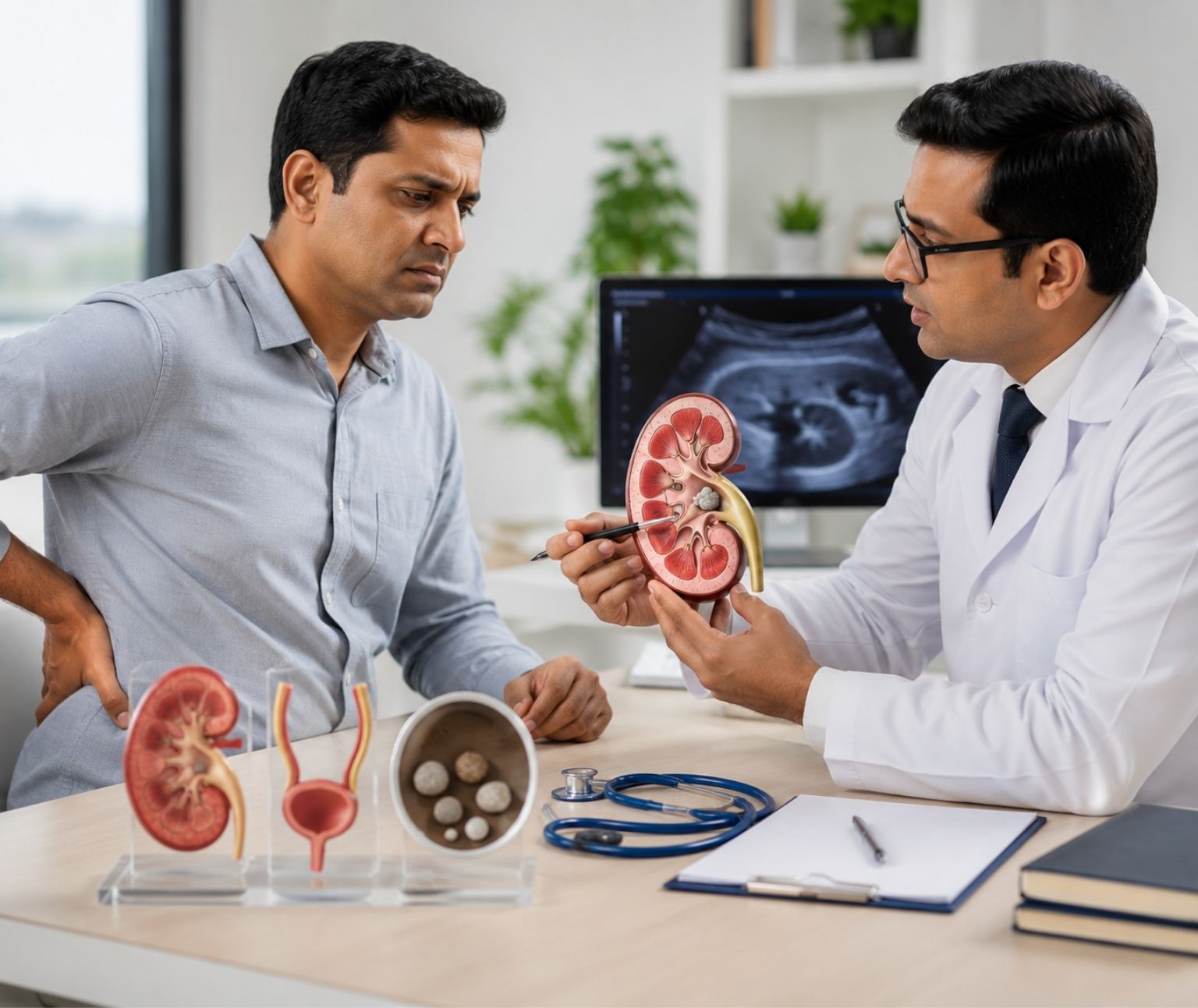
Kidney stones are hard masses of minerals and salts that develop in the kidneys and can cause intense pain if they block the urinary tract. It’s very common and can occur at any age. It is crucial to know the available
kidney stone treatment options, as the type, location and size of the stone will determine the appropriate treatment. Early diagnosis and prompt treatment can help alleviate pain, prevent complications and preserve kidney function.
Some small kidney stones pass on their own with the aid of medication and fluid intake, while others may need special procedures to be safely removed. Early medical evaluation is important to avoid infections, urinary blockage or kidney damage that can occur if treatment is delayed.
Our skilled urologists at Blue Bliss Hospital provide cutting-edge diagnostic capabilities and tailor treatment strategies to meet the needs of each patient, ensuring they receive the most appropriate care.
Symptoms of Kidney Stones
Identifying
kidney stone symptoms early, complications can be avoided. The most frequent symptoms are:
- Back, side or lower abdomen pain that is severe
- Dysuria or pyuria (infection in the urine)
- Blood in the urine
- Urge to urinate often
- Nausea or vomiting
- Fever or chills if there is an infection
When is Treatment Required?
Not all kidney stones need to be treated right away. Small stones may pass if you drink plenty of water and take pain relievers and relaxants for the urinary tract. But when the stone is causing a lot of pain, causing frequent infections, blocking the urine or failing to pass on its own, then medical treatment is needed.
The most suitable
kidney stone treatment depends on the imaging scans, blood tests, urine analysis, and patient’s condition. Early treatment is important to maintain kidney function and avoid further complications.
Treatment Options for Kidney Stone
There are several effective
treatment for kidney stones, depending on the size, location, and type of stone.
Treatment may include:
- Drinking plenty of water to help pass small stones
- Pain-relieving medications
- Medicines to relax the ureters and help passage of stones
- Dietary modifications
- Minimally invasive procedures
- Surgical treatment if required
Advanced Procedures for Kidney Stones
There are a number of minimally invasive
kidney stone removal options available in modern-day urology that have excellent recovery times and outcomes.
- ESWL treatment: Used for small and medium-sized stones, which are broken up by shock waves and passed through the urine.
- Laser Treatment: Modern laser treatment for kidney stones has become one of the most effective minimally invasive procedures. During the procedure, a thin scope is passed in the urinary tract to reach the stone.
- Ureteroscopy for kidney stones: It is recommended when stones are lodged in the ureter or lower kidney, allowing direct removal or fragmentation without external cuts.
- PCNL surgery: It is performed through a small incision in the back and is considered one of the most effective options for large kidney stone treatment.
How Doctors Decide the Appropriate Treatment
Each patient needs a personalised treatment plan.
- Size of the kidney stone
- Location of the stone
- Type and composition of the stone
- Severity of symptoms
- Presence of infection
- Overall kidney function and medical history
Treatment is determined by a combination of ultrasound, CT scan, blood tests, and urine analysis to ensure the safest and most effective treatment.
Recovery and Prevention
The recovery time will depend on the type of procedure performed and the general health of the patient. Patients are able to return to normal activities within a few days for most of the minimally invasive procedures and a slightly longer recovery period for larger procedures.
Successful
kidney stone management does not end after treatment. Patients can reduce the risk of recurrence by following healthy lifestyle habits, such as:
- Consuming at least 2–3 litres of water every day
- Cutting down on excess salt consumption
- Consuming a well-balanced diet
- Having a healthy weight
- Taking prescribed medications
- Going to regular post-operative visits
Conclusion
Choosing the right
kidney stone treatment options depends on the size, location, and severity of the stone, as well as the patient’s overall health. Modern treatment methods provide safe and effective solutions, ranging from medications to advanced minimally invasive procedures.
At
Blue Bliss Hospital, our experienced urology specialists provide accurate diagnosis, personalised treatment, and compassionate care to help patients recover comfortably while protecting their long-term kidney health.
Frequently Asked Questions
- Is it possible to pass a kidney stone?
If the kidney stones are small, they may pass on their own if the person drinks enough water and takes the prescribed medicines.
- Does surgery need to be performed on all kidney stones?
No , there are medications and minimally invasive treatments that can be used to treat many kidney stones.
- Which is the most effective treatment for a large stone?
Treatment will depend on the size, location and type of the stone.
- What can be done to avoid kidney stones coming back?
Stay well hydrated, have a balanced diet, limit salt and follow your doctor’s recommendations on preventive care.
- When can I see a urologist?
If you have severe pain, blood in the urine, fever or trouble urinating, get medical help.