
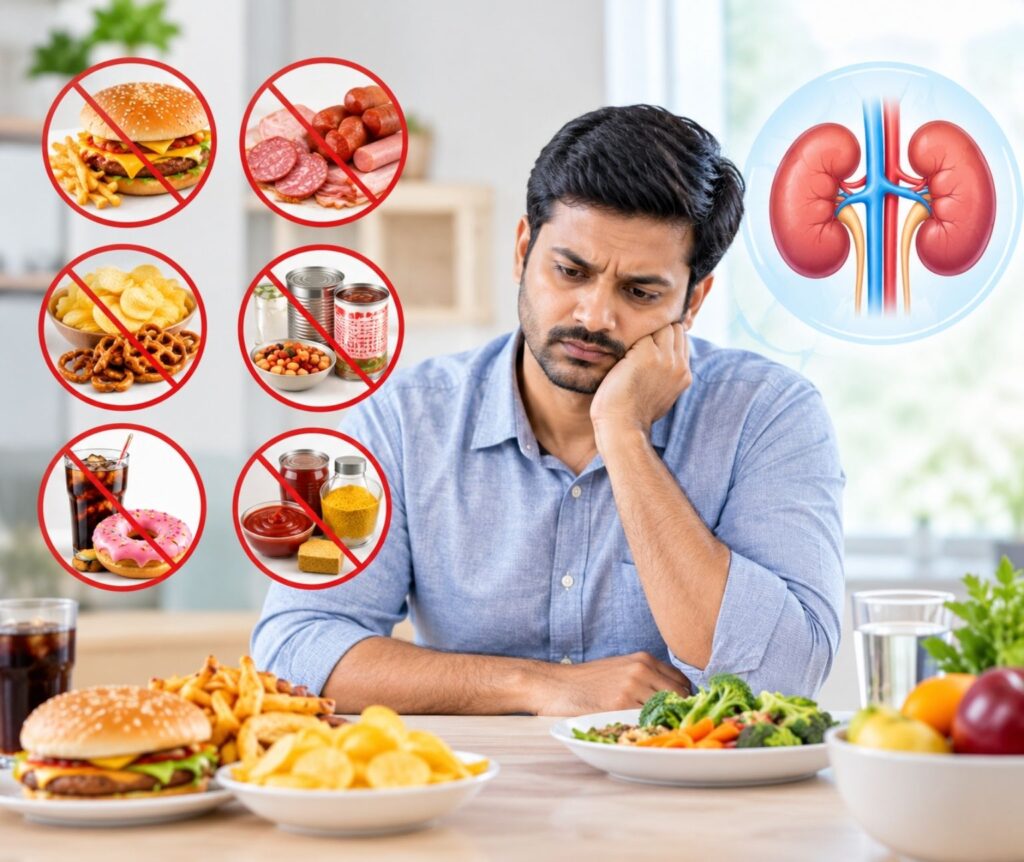
A kidney-friendly diet helps manage nutrients such as sodium, potassium, phosphorus, protein, and fluid levels according to an individual’s health condition. Blue Bliss Hospital offers personalised kidney care guidance for individuals seeking expert advice from a kidney specialist in Bangalore.
This guide explains the foods kidney patients may need to limit or avoid, why they may affect kidney health, and healthier alternatives that support overall well-being.
Why Certain Foods May Be Harmful for Kidney Patients
Healthy kidneys help maintain the balance of minerals and remove waste products from the body. When kidney function decreases, excess amounts of sodium, potassium, and phosphorus may build up in the blood. Consuming foods high in these nutrients without medical guidance may contribute to:- Increased blood pressure
- Fluid retention
- Mineral imbalance
- Bone health concerns
- Heart-related complications
Foods Kidney Patients May Need to Avoid and Better Alternatives
| Foods to Limit or Avoid | Why They May Be a Concern | Better Food Choices |
| Pickles, chips, instant noodles, packaged snacks | High sodium content may increase blood pressure and fluid retention | Fresh homemade meals with limited salt and natural herbs |
| Processed meats like sausages, bacon, and packaged meat | Often contain high sodium, preservatives, and unhealthy fats | Fresh protein sources as recommended by a doctor |
| Bananas, oranges, coconut water, potatoes, and tomatoes (when potassium levels are high) | Excess potassium may affect heart and muscle function | Apples, grapes, berries, cauliflower, and cabbage depending on potassium levels |
| Cheese, dairy products, cola drinks, nuts, and seeds | May contain high phosphorus levels | Doctor-approved low-phosphorus alternatives |
| Soft drinks, sweets, cakes, and sugary desserts | May affect blood sugar control, especially in people with diabetes-related kidney problems | Fresh fruits in controlled portions and low-sugar options |
| Fried foods, fast foods, and bakery items | High unhealthy fats may increase cardiovascular risks | Grilled, steamed, or lightly cooked foods |
| Excess salty restaurant food | Makes sodium control difficult and may contribute to swelling | Freshly prepared home-cooked meals |
1. High-Sodium Foods
Salt is one of the most important nutrients kidney patients may need to control. Reduced kidney function can make it difficult for the body to remove excess sodium, which may contribute to water retention and increased blood pressure. Foods that may need limitation include:- Pickles
- Papad
- Packaged snacks
- Instant soups
- Fast food
- Processed foods
2. High-Potassium Foods
Potassium plays an important role in normal body function. However, some kidney patients may develop high potassium levels because their kidneys cannot remove excess potassium effectively. Foods that may require limitation include:- Bananas
- Oranges
- Potatoes
- Tomatoes
- Coconut water
- Spinach
3. High-Phosphorus Foods
When kidney function declines, phosphorus levels may increase in the blood. High phosphorus levels may affect bone strength and cardiovascular health. Foods commonly high in phosphorus include:- Dairy products
- Cheese
- Nuts
- Seeds
- Cola beverages
- Processed foods
4. Processed and Packaged Foods
Processed foods are often among the foods kidney patients need to limit because they commonly contain:- Excess sodium
- Artificial additives
- Preservatives
- Unhealthy fats
- Frozen meals
- Instant noodles
- Packaged snacks
- Ready-to-eat foods
5. Sugary Foods and Drinks
High sugar intake may affect blood sugar control and increase the risk of complications, especially among people with diabetes-related kidney disease. Limit:- Soft drinks
- Sweetened juices
- Sweets
- Cakes
- Desserts
6. Fried and Fatty Foods
Fried foods may increase cholesterol levels and cardiovascular risks, which can already be a concern for many kidney patients. Avoid frequent consumption of:- Fried snacks
- Fast food
- Deep-fried items
- Foods cooked with excessive oil
- Steaming
- Boiling
- Grilling
- Roasting
Foods That Support Kidney Health
Depending on kidney function and medical advice, kidney patients may include:- Fresh low-potassium fruits
- Kidney-friendly vegetables
- Controlled protein portions
- Healthy cooking oils
- Fresh homemade meals
Kidney Diet Guidance at Blue Bliss Hospital Bangalore
Following the right diet plays an important role in kidney disease management. At Blue Bliss Hospital Bangalore, experienced nephrology specialists provide guidance for patients dealing with chronic kidney disease, kidney failure, dialysis, and other kidney-related conditions.If you are looking for a kidney hospital in Bangalore or a nephrologist in Bangalore, Blue Bliss Hospital provides kidney care support with personalised treatment guidance based on patient needs.
Frequently Asked Questions
-
Which foods should kidney patients avoid?
Depending on kidney function and medical advice, patients may need to limit foods high in sodium, phosphorus, potassium, sugar, and processed ingredients. - Can kidney patients eat fruits?
Yes, but fruit choices depend on potassium levels and kidney function. A healthcare professional can recommend suitable options. - Should kidney patients stop eating protein?
No. Protein requirements vary depending on kidney disease stage, dialysis status, and overall health. Patients should follow their nephrologist’s recommendations. - Is salt harmful for kidney patients?
Excess salt may increase blood pressure and fluid retention, which can affect kidney health. - Where can kidney patients receive diet guidance in Bangalore?
Patients can consult the nephrology team at Blue Bliss Hospital in Bangalore for personalised kidney care and dietary recommendations.