
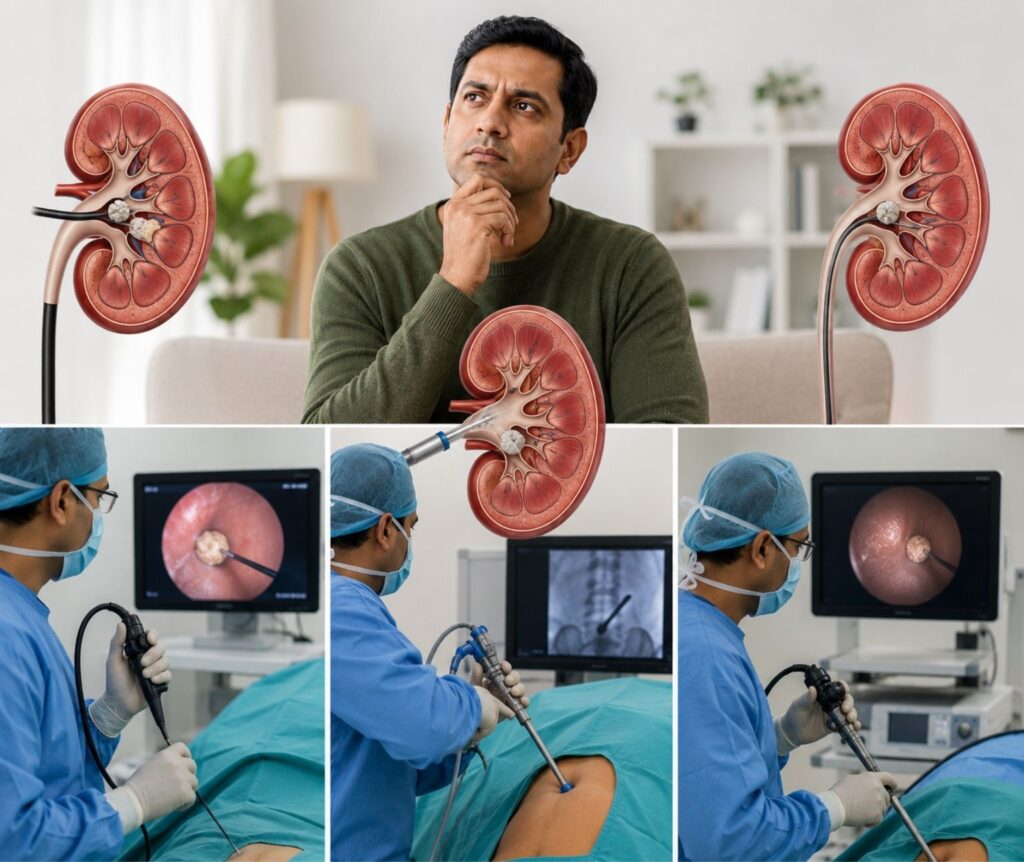
Modern procedures are designed to minimise pain, shorten hospital stays, and improve recovery. However, no single procedure is suitable for every patient. The best choice depends on several factors, including the stone’s size, position, overall kidney health, and medical history.
At Blue Bliss Hospital, our experienced urologists carefully evaluate every patient before recommending the most appropriate treatment. Knowing the differences between these procedures allows patients to make informed decisions and approach treatment with greater confidence.
Why Is a Comparison Important?
Every kidney stone is different, and selecting the right procedure plays an important role in achieving successful outcomes. A proper kidney stone surgery comparison helps patients understand the benefits and limitations of each technique instead of assuming that one treatment is suitable for everyone.Doctors usually consider:
- Size of the stone
- Location of the stone
- Number of stones
- Kidney anatomy
- Patient’s overall health
- Previous history of kidney stones
What Is RIRS?
The RIRS procedure (Retrograde Intrarenal Surgery) is a minimally invasive technique in which a flexible scope is passed through the urinary tract to reach the kidney. A laser is then used to break the stone into tiny fragments that can either pass naturally or be removed.This procedure is generally recommended for small to medium-sized kidney stones and offers faster recovery with minimal discomfort.
What Is PCNL?
The PCNL procedure (Percutaneous Nephrolithotomy) is commonly performed for large or complex kidney stones. A small incision is made in the back to access the kidney directly, allowing the surgeon to remove the stone safely.Although recovery may take slightly longer than other procedures, PCNL provides excellent stone clearance for patients with larger stones.
What Is URS?
The URS procedure (Ureteroscopy) involves passing a thin scope through the urinary tract to locate stones in the ureter. A laser or specialised instruments are then used to fragment or remove the stone.It is an effective option for stones located lower in the urinary tract and usually requires no external incision.
Comparing the Procedures
| Feature | RIRS | PCNL | URS |
| Best suited for | Small to medium size kidney stones | Large or complex kidney stones | Ureter |
| Incision | No | Small incision | No |
| Hospital stay | Short | Slightly longer | Short |
| Recovery | Quick | Moderate | Quick |
| Stone removal | Laser fragmentation | Direct removal | Laser fragmentation or removal |
Which Procedure Uses Laser Technology?
Modern laser kidney stone surgery is widely used in both RIRS and URS to break stones into tiny fragments. Laser technology provides excellent precision while reducing damage to surrounding tissues and supporting faster recovery.These techniques are considered forms of minimally invasive kidney stone treatment, allowing many patients to return to their normal routine within a few days.
How Do Doctors Choose the Right Procedure?
The choice of kidney stone removal surgery depends on several medical factors rather than patient preference alone.Doctors evaluate:
- Stone size
- Stone location
- Number of stones
- Kidney function
- Presence of infection
- Overall health condition
Conclusion
Understanding RIRS vs PCNL vs URS helps patients recognise that every kidney stone requires an individualised treatment approach. Each procedure has its own advantages, and the most suitable option depends on the size, location, and complexity of the stone.At Blue Bliss Hospital, our experienced urology specialists provide comprehensive evaluation and personalised treatment plans using advanced technology to ensure safe stone removal, quicker recovery, and long-term kidney health.
Frequently Asked Questions
- Which procedure is best for large kidney stones?
PCNL is commonly recommended for large or complex kidney stones. - Is RIRS better than PCNL?
Both procedures are effective, but the choice depends on the size and location of the stone. - Does URS require an incision?
No. URS is performed through the natural urinary tract without external cuts. - Is laser treatment used in all procedures?
Laser technology is commonly used in RIRS and URS but may not be required in every PCNL procedure. - How long does recovery take?
Recovery varies depending on the procedure and the patient’s overall health, but most minimally invasive treatments have relatively short recovery periods.